
The Trent Center’s story begins with a surgeon who believed that medicine required more than technical expertise.
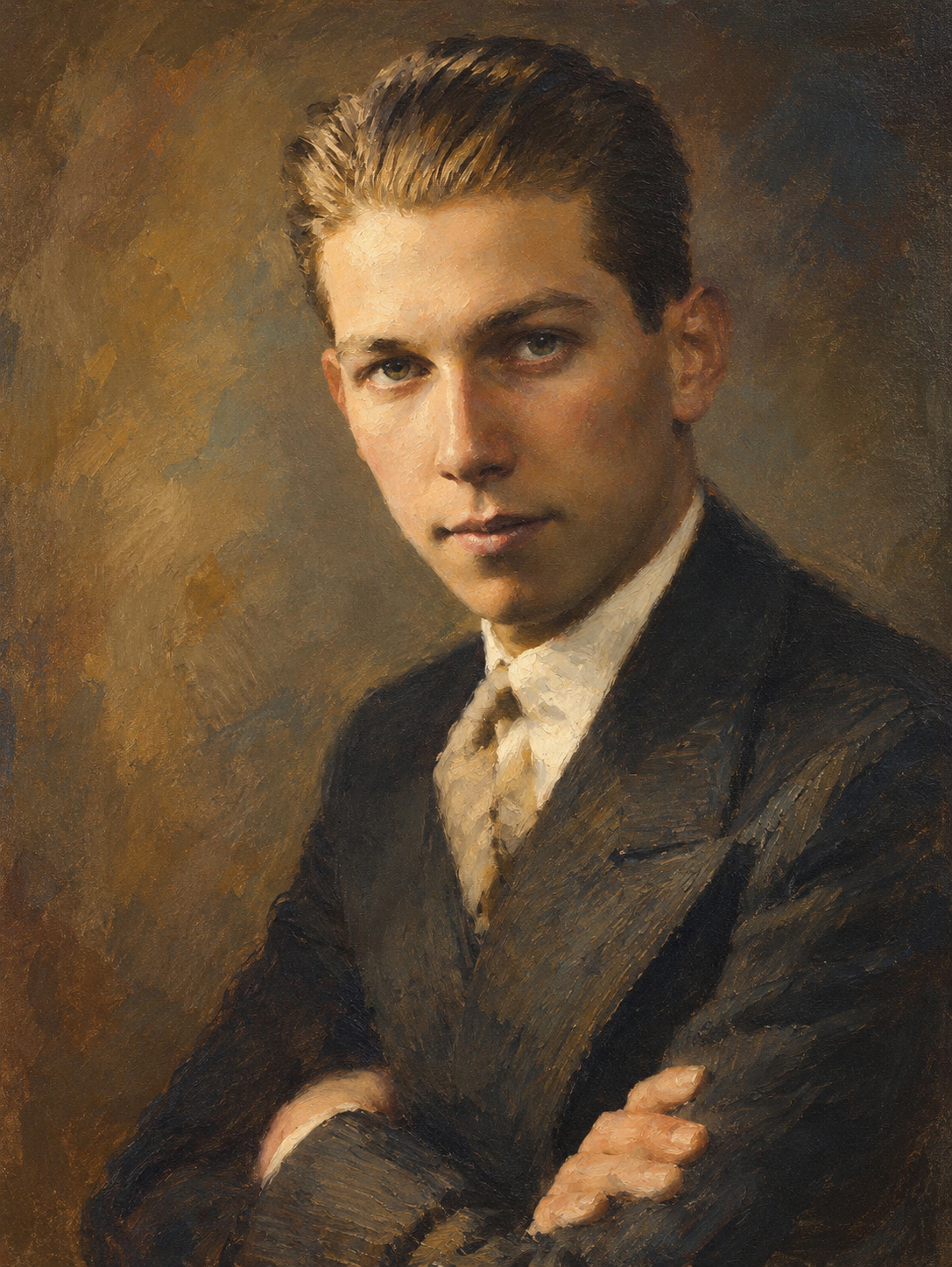
Josiah Charles Trent, MD (1914–1948) was a surgeon and historian of medicine. A Duke undergraduate and graduate of the University of Pennsylvania School of Medicine, Trent completed his surgical residency at Duke and pursued additional training in thoracic surgery at the University of Michigan. He returned to Duke to lead its Division of Thoracic Surgery. Even while building a distinguished surgical career—and living with the cancer that would take his life at just 34—he remained deeply engaged with the history and humanistic traditions of medicine.
Together with his wife, Mary Duke Biddle Trent Semans, Trent assembled an extraordinary collection of rare books and manuscripts related to the history of medicine. Trent had always intended for the collection to reside at Duke, and following his death, Semans gave it to the University in 1956. It became the foundation of what is now the Josiah Charles Trent History of Medicine Collections. Their legacy reflected a conviction that physicians should understand not only the science of medicine, but also its history, values, and place in human life.
That vision found a new institutional home in 1999, when Duke established the Center for the Study of Medical Ethics and Humanities. Founded under the leadership of Jeremy Sugarman, MD, MPH, MA, the Center created an interdisciplinary home within the School of Medicine for scholarship, education, and engagement with the ethical and human dimensions of medicine.
In 2006, the Center was renamed the Trent Center for Bioethics, Humanities & History of Medicine in honor of Josiah Trent and the foundational support of the Trent Semans family. Mary Semans’s generosity helped establish endowed professorships in medical humanities and the history of medicine, strengthening these fields as enduring parts of Duke’s academic community. Over the decades that followed, directors Ross McKinney Jr., MD and Jeffrey Baker, MD, PhD expanded the Center’s work across bioethics, medical humanities, and history of medicine, broadening the scope of its education and scholarship.
In 2026, pediatric surgeon Ryan Antiel, MD, MSME, became the Center’s fourth director—continuing a story that began with a surgeon who believed deeply in the humanistic dimensions of medicine.
Today, more than 25 years after the Center’s founding—and nearly eight decades after Josiah Trent’s death—the Trent Center carries forward a legacy rooted in the conviction that medicine is both a scientific and a deeply human endeavor, bringing the resources of bioethics and humanities to bear on the practice and purposes of medicine.