Medicine is changing rapidly. The need for wisdom about what medicine is for has never
been greater.
Scientific discovery, artificial intelligence, and emerging technologies are transforming what
clinicians can know and do. These advances hold extraordinary promise. But they cannot
answer medicine’s most fundamental human questions: What do patients need from us beyond
knowledge and technical skill? How should we exercise judgment when the right path is
uncertain? And what kind of people must we become to practice medicine well?
These questions are at the heart of the Trent Center.
Medical education rightly devotes enormous attention to the knowledge and skills required to
care for patients. But becoming a good clinician requires more than technical excellence. It
requires learning to attend carefully, to recognize patients as persons, to exercise practical
wisdom, to remain present in the face of suffering, and to understand medicine as a
fundamentally human practice.
Bioethics, humanities, and history help us do this. They teach us to ask what we ought to do
and who we ought to become; to see more fully the person before us; and to understand how
medicine became what it is so that we can imagine what it might become.
At Duke, we have a remarkable opportunity to bring these ways of thinking into the heart of
medical education and clinical practice. Our vision is not simply to offer courses or programs at
isolated moments in training. We are building a journey of formation—beginning with students
considering a life in medicine, continuing through medical school and residency, and extending
into faculty life. At every stage, clinicians need communities in which they can step outside the
relentless demands of training and practice to reflect on the “why” of their work, learn from one
another, and remember what drew them to medicine in the first place.
My hope is that the Trent Center can help Duke become a national leader in this work:
developing, studying, and sharing new models of clinician formation while remaining rooted in
the patients and communities we serve. We want Duke to be a place known not only for asking
what medicine can do, but also what medicine is for—and who clinicians must become to
practice it well.
That is the human work of medicine. And it is the work of the Trent Center.
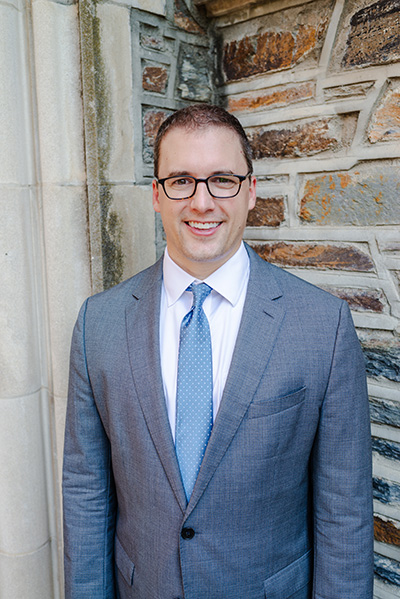
Ryan M. Antiel, MD, MSME, FACS
Director, Trent Center for Bioethics, Medical Humanities, and History of Medicine
Pediatric Surgeon, Duke University School of Medicine